Punjab has been the backbone of India’s agricultural economy, contributing significantly to the nation’s food security. The state’s farming sector has witnessed remarkable progress over the years, driven by institutional reforms, technological advancements, and the relentless efforts of its farmers.
The Green Revolution played a transformative role in Punjab’s agriculture, introducing high-yielding seed varieties, mechanized farming, and an extensive irrigation network. While these measures led to a significant rise in productivity, they also brought about long-term challenges that now threaten the sustainability of the sector.
The overdependence on wheat-rice monoculture has resulted in serious environmental and economic concerns. Groundwater depletion, declining soil fertility, excessive use of chemical fertilizers, and rising input costs have placed immense pressure on farmers. In addition, unsustainable irrigation practices, soil degradation, and vulnerability to climate change have further exacerbated these issues.
To address these growing concerns, the Punjab government has introduced the Draft Agriculture Policy 2024, aiming to develop a more sustainable and resilient agricultural framework. The policy seeks to incorporate expert recommendations and stakeholder inputs to ensure its effective implementation.
One of the key priorities of the policy is crop diversification and sustainable farming practices. Shifting away from the wheat-rice cycle and promoting alternative crops such as pulses, oilseeds, millets, and horticultural produce can reduce pressure on natural resources while improving farm incomes.
Water and soil resource management is another critical focus, emphasizing sustainable irrigation practices and groundwater conservation to combat Punjab’s rapidly depleting water reserves. The adoption of efficient irrigation techniques, such as drip irrigation and rainwater harvesting, is being encouraged to optimize water use.
Soil health management and reducing chemical dependency are also central to the policy’s objectives. Excessive reliance on chemical fertilizers and pesticides has negatively impacted soil fertility, making it essential to promote organic farming, balanced fertilization, and the use of bio-fertilizers.
The policy further highlights the importance of adapting to changing climatic conditions with resilient crop varieties to ensure stable agricultural productivity in the face of unpredictable weather patterns.
Despite these forward-looking measures, experts and farmer organizations have raised concerns about the feasibility and execution of the policy. Key challenges include inadequate financial support for farmers transitioning to new crops, gaps in market linkages, and the need for improved infrastructure.
Without proper implementation strategies, financial incentives, and institutional support, the proposed reforms may struggle to achieve their intended impact.
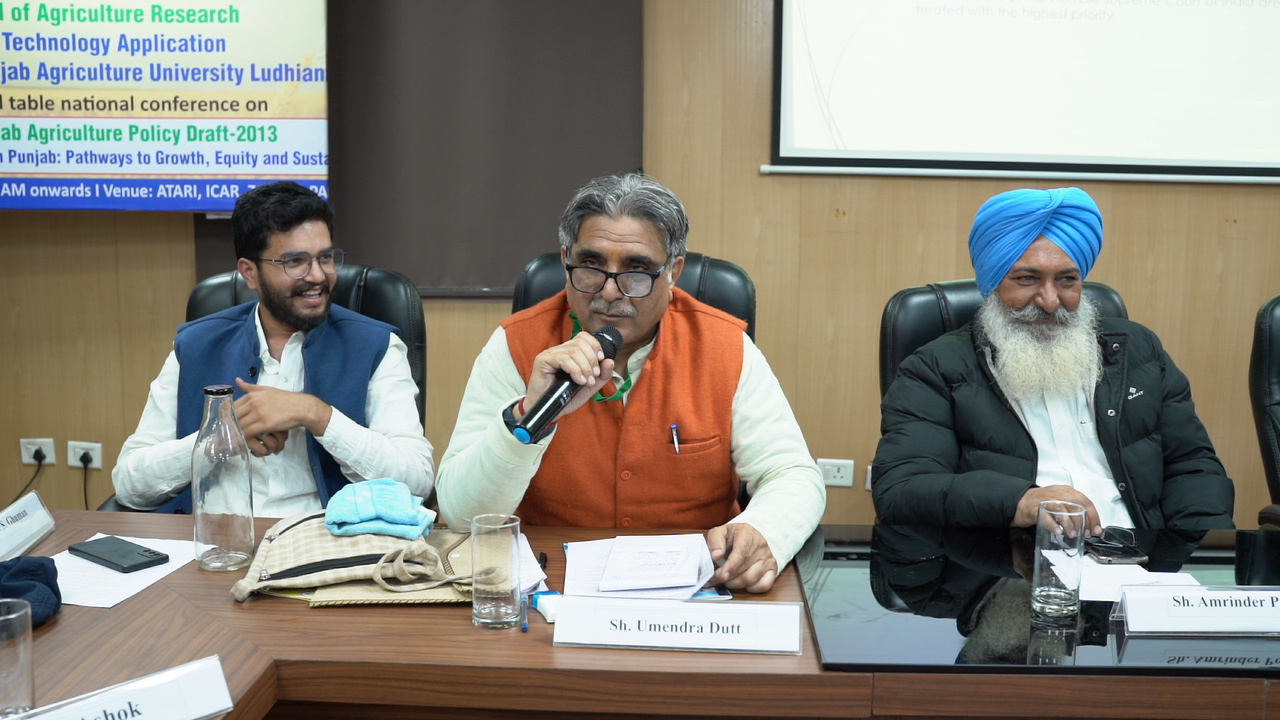
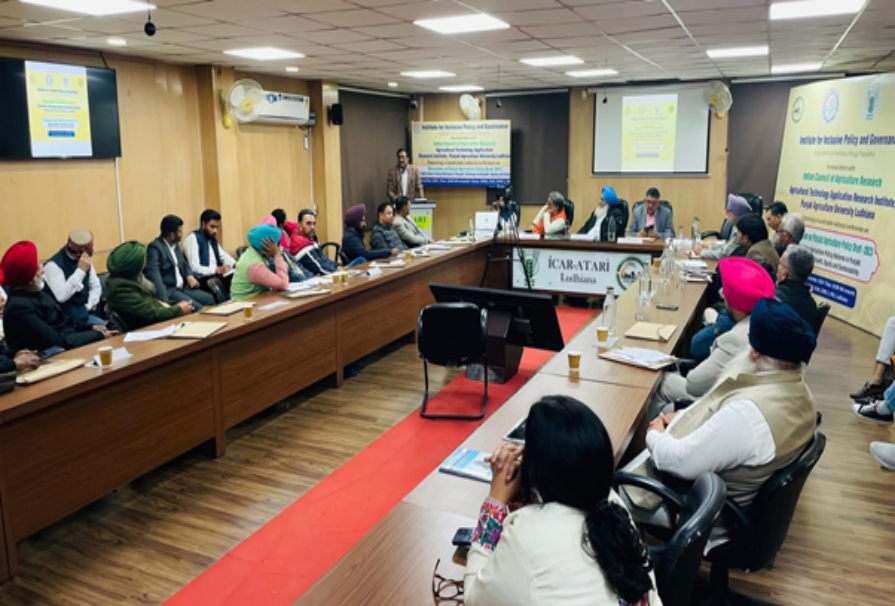
This conference serves as a vital platform for in-depth discussions on the Draft Agriculture Policy 2024, bringing together policymakers, researchers, industry experts, farmer representatives, and civil society organizations.
The primary objective is to analyze the policy, provide constructive inputs, and develop practical implementation strategies that can help Punjab achieve a sustainable, resilient, and economically viable agricultural future.
Through collaborative efforts, this dialogue aims to create effective solutions that balance productivity, environmental sustainability, and farmer welfare.
To critically analyze Punjab's Agriculture Policy draft and identify its strengths, gaps, and areas for improvement.
To foster stakeholder engagement by bringing together policymakers, researchers, farmers, industry leaders, and civil society to discuss key challenges and opportunities.
To propose actionable recommendations that align with sustainability, economic equity, and resilience to climate change.
To promote evidence-based policymaking by integrating insights from academia, research, and grassroots experiences.
Crop Diversification and Sustainable Farming Practices
Water and Soil Resource Management
Climate-Resilient Agriculture
Agricultural Marketing and Value Chain Development
Stubble Burning and Environmental Concerns
Farmer Welfare and Financial Inclusion
Technology, Innovation, and R&D
Model Farmers and Changing Agricultural Practices
Change in Irrigation Practices
Patron
Executive Director – RMP
Co-Patron
Executive Director – KVM
Co-Patron
Director – ATARI
Organizing Secretary
Director – IIPG
Organizing Secretary
Project Coordinator – ICAR
Convener
Organic Farmer